How to Keep That Coat Healthy, Comfortable, and Under Control
Golden Retrievers are famous for their beautiful, flowing coats—but that beauty comes with responsibility. Proper grooming is not just about appearance; it plays a critical role in a Golden Retriever’s comfort, skin health, hygiene, and overall wellbeing.
This guide covers everything Golden Retriever owners need to know about grooming essentials, including coat care, brushing routines, bathing, nail trimming, ear care, and seasonal shedding management. Whether you’re a first-time owner or an experienced Golden Retriever enthusiast, consistent grooming helps your dog stay healthy, happy, and confident.
For a full understanding of the breed’s physical traits and coat type, start with:
👉 What Is a Golden Retriever?
Understanding the Golden Retriever Coat
Golden Retrievers have a dense, water-repellent double coat, originally developed to protect them while retrieving game in wet, cold environments.
The Two Coat Layers
- Outer coat: Long, flat or wavy guard hairs that repel water and debris
- Undercoat: Soft, dense insulation that sheds seasonally
This coat type provides excellent protection—but it also means Golden Retrievers shed year-round, with heavier shedding during spring and fall.
Why Grooming Matters for Golden Retrievers
Regular grooming supports:
- Healthy skin and coat
- Reduced matting and tangles
- Early detection of skin issues or parasites
- Improved comfort during seasonal shedding
- Cleaner ears, teeth, and paws
- Stronger bonding between dog and owner
Neglecting grooming can lead to painful mats, skin infections, ear problems, and unnecessary discomfort.
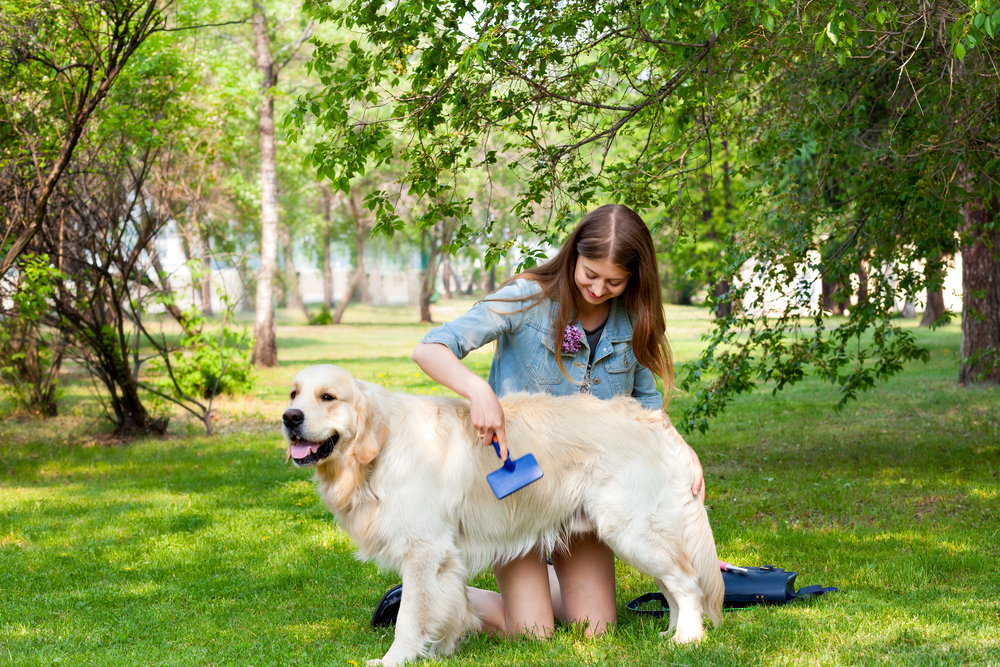
Brushing: The Foundation of Grooming
How Often to Brush
- 2–3 times per week under normal conditions
- Daily brushing during heavy shedding seasons
Best Brushes for Golden Retrievers
- Slicker brush (removes loose hair and tangles)
- Undercoat rake (essential during seasonal shedding)
- Pin brush (finishing and feathering areas)
Focus Areas
- Chest and neck
- Behind the ears
- Feathering on legs and tail
- Underbelly
Regular brushing prevents matting and keeps oils evenly distributed through the coat.
Managing Seasonal Shedding
Golden Retrievers “blow coat” twice a year—typically in spring and fall.
Shedding Control Tips
- Increase brushing frequency
- Use an undercoat rake
- Bathe with a deshedding shampoo
- Ensure proper nutrition and hydration
For insight into how diet affects coat health, see:
👉 Golden Retriever Health & Care Guide
Bathing Your Golden Retriever
How Often to Bathe
- Every 6–8 weeks, or as needed
- Avoid overbathing (can dry out skin)
Bathing Best Practices
- Use a dog-specific shampoo
- Rinse thoroughly to prevent residue
- Dry completely, especially under the ears and chest
Bathing too frequently strips natural oils and can worsen skin conditions.
Nail Trimming and Paw Care
Golden Retrievers need regular nail maintenance to prevent joint strain and discomfort.
Nail Care Guidelines
- Trim every 3–4 weeks
- Avoid cutting into the quick
- Use treats to reinforce calm behavior
Check paw pads regularly for:
- Cracks
- Debris
- Redness or irritation
Ear Cleaning: A Critical Grooming Step
Golden Retrievers are prone to ear infections due to their floppy ears.
Ear Care Routine
- Check ears weekly
- Clean gently with a vet-approved solution
- Never insert tools deep into the ear canal
Signs of ear trouble include redness, odor, head shaking, or scratching.
Dental Hygiene and Grooming
Oral health is often overlooked but essential.
Dental Care Essentials
- Brush teeth 2–3 times per week
- Use dog-safe toothpaste
- Offer dental chews or toys
Poor dental hygiene can lead to gum disease and systemic health issues.
Grooming Puppies vs Adults
Golden Retriever Puppies
- Start grooming early to build tolerance
- Keep sessions short and positive
- Focus on brushing, handling paws, ears, and mouth
For early puppy routines, see:
👉 Golden Retriever Puppy Care: The First 30 Days
Adult Golden Retrievers
- Maintain consistent grooming schedule
- Increase brushing during shedding seasons
- Monitor skin and coat changes with age
Professional Grooming: When to Use It
Professional grooming can help with:
- Heavy deshedding
- Sanitary trims
- Nail trimming for resistant dogs
Most Golden Retrievers benefit from professional grooming every 8–12 weeks, depending on coat condition and lifestyle.
Grooming and Behavior
Grooming is also a training opportunity.
Dogs who are groomed calmly and consistently:
- Develop better handling tolerance
- Show less anxiety during vet visits
- Build trust with their owners
Training fundamentals that support grooming success are covered in:
👉 Golden Retriever Training Fundamentals
Common Grooming Mistakes to Avoid
- Shaving the coat (damages insulation and regrowth)
- Skipping brushing during shedding season
- Using human shampoo
- Ignoring ear care
- Overbathing
Golden Retriever coats are designed to protect them—maintenance, not removal, is key.
Final Thoughts
Golden Retriever grooming is about more than keeping your dog looking good. It supports physical health, emotional comfort, and long-term wellbeing. With consistent brushing, proper bathing, regular ear and nail care, and early positive handling, grooming becomes a routine your dog learns to enjoy.
A well-groomed Golden Retriever is not only beautiful—but comfortable, confident, and healthy.
📘 Continue Exploring the Golden Retriever Breed
→ What Is a Golden Retriever?
→ Golden Retriever Temperament & Personality
→ Golden Retriever Health & Care Guide
→ Golden Retriever Exercise & Enrichment
→ Golden Retriever Training Fundamentals
→ Preparing Your Home for a Golden Retriever Puppy
For broader dog ownership principles that apply across all breeds, visit
→ The Complete Dog Guide